Taboola Header Bidding: Complete Publisher Guide to Implementation and Optimization
Master Taboola header bidding integration for publishers. Learn setup, optimization strategies, and revenue maximization techniques for better programmatic yields.
What is Taboola Header Bidding?
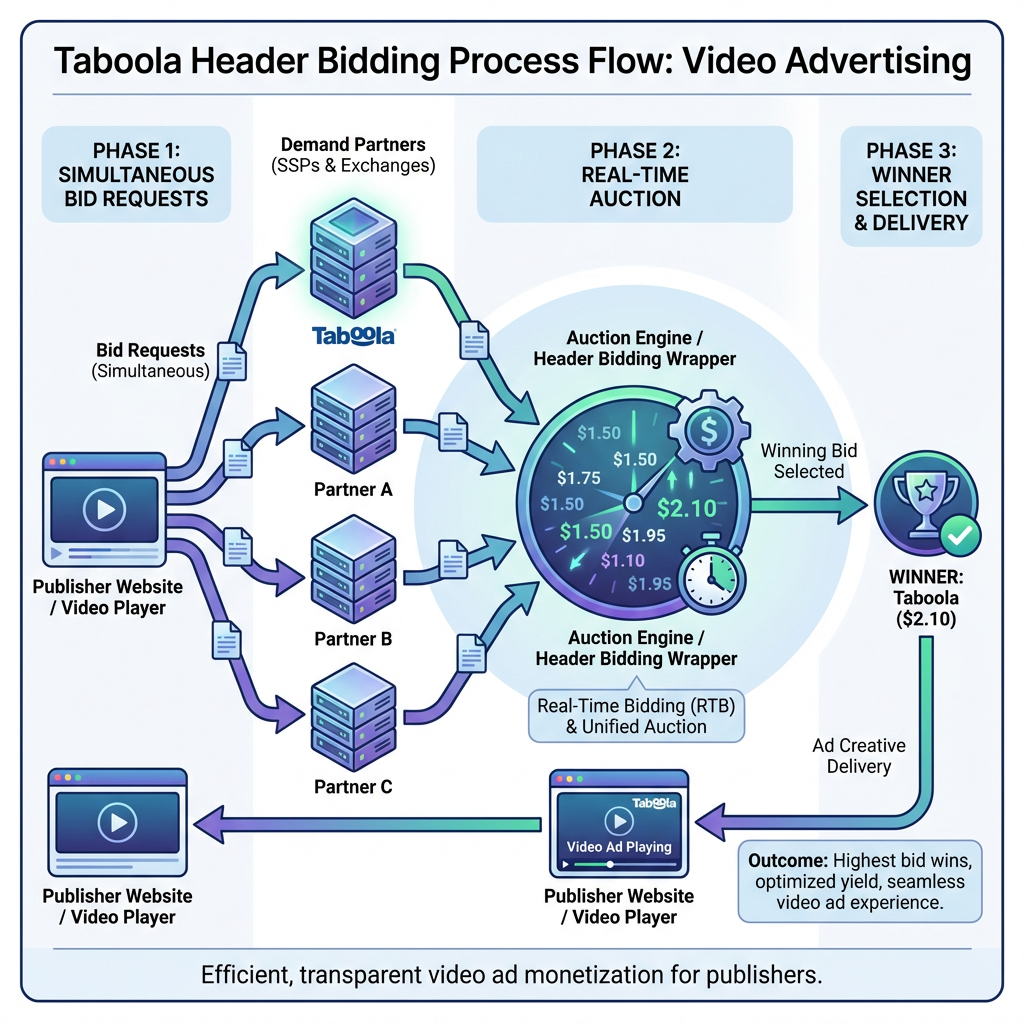
Taboola header bidding represents a sophisticated programmatic advertising strategy that allows publishers to maximize their ad revenue by enabling Taboola's content recommendation platform to compete in real-time auctions alongside other demand sources. Unlike traditional waterfall setups where ad requests are processed sequentially, header bidding enables simultaneous bid requests to multiple advertisers, including Taboola's native advertising network.
For publishers looking to optimize their monetization strategy, Taboola header bidding offers access to premium native advertising demand while maintaining competitive yield optimization. This approach ensures that Taboola's contextually relevant content recommendations compete fairly against other programmatic demand sources, ultimately driving higher CPMs and fill rates.
How Taboola Header Bidding Works
The Technical Process
Taboola header bidding operates through a client-side JavaScript implementation that executes before your primary ad server makes its final ad selection. Here's the step-by-step process:
- Page Load Initialization: When a user visits your website, the header bidding wrapper loads and identifies available ad inventory
- Simultaneous Bid Requests: The system sends bid requests to Taboola and other configured demand partners simultaneously
- Real-Time Auction: Each demand source, including Taboola, evaluates the request and submits their highest bid
- Price Competition: All bids are collected and compared in real-time
- Winner Selection: The highest bidder wins the impression, ensuring maximum revenue for the publisher
- Ad Rendering: The winning creative is delivered to the user
Integration Architecture
Taboola's header bidding solution integrates seamlessly with popular header bidding wrappers like Prebid.js, Amazon TAM (Transparent Ad Marketplace), and proprietary solutions. The integration typically involves:
- Prebid.js Configuration: Adding Taboola as a bidder with specific parameters
- Ad Unit Mapping: Defining which placements are eligible for Taboola demand
- Timeout Settings: Configuring appropriate timeouts to balance revenue and page performance
- Price Granularity: Setting up proper price buckets for optimal competition
Setting Up Taboola Header Bidding
Prerequisites and Requirements
Before implementing Taboola header bidding, publishers need:
- Active Taboola publisher account with approved website
- Existing header bidding infrastructure (Prebid.js or similar)
- Technical resources for implementation and testing
- Minimum traffic thresholds (typically 100K+ monthly pageviews)
- Compliance with Taboola's content and quality guidelines
Step-by-Step Implementation
Step 1: Account Setup and Configuration
Work with your Taboola account manager to:
- Configure your publisher account for header bidding
- Define targeting parameters and inventory segments
- Set up reporting and analytics access
- Establish minimum bid floors and pricing rules
Step 2: Technical Integration
// Example Prebid.js configuration for Taboola
var adUnits = [{
    code: 'native-ad-unit',
    mediaTypes: {
        native: {
            title: { required: true },
            image: { required: true },
            sponsoredBy: { required: true }
        }
    },
    bids: [{
        bidder: 'taboola',
        params: {
            publisherId: 'your-publisher-id',
            tagId: 'homepage-native'
        }
    }]
}];
Step 3: Testing and Quality Assurance
Conduct thorough testing including:
- Bid response validation
- Creative rendering verification
- Performance impact assessment
- Cross-browser compatibility testing
- Mobile responsiveness validation
Common Implementation Challenges
Publishers often encounter these challenges during Taboola header bidding setup:
Latency Issues: Native ad formats can increase page load times. Implement appropriate timeouts and asynchronous loading to mitigate impact.
Creative Quality Control: Ensure Taboola's content recommendations align with your brand standards through proper filtering and approval workflows.
Inventory Conflicts: Avoid competing placements between direct Taboola integrations and header bidding implementations.
Optimization Strategies for Maximum Revenue
Bid Floor Management
Effective bid floor strategies significantly impact Taboola header bidding performance:
- Dynamic Floors: Implement dynamic pricing based on user segments, geography, and time of day
- Historical Analysis: Use performance data to set optimal floor prices that maximize revenue without sacrificing fill rates
- A/B Testing: Continuously test different floor strategies to identify optimal pricing
Placement Optimization
Taboola's native advertising performs best in specific contexts:
High-Performance Placements:
- Below article content
- Within content feeds
- Sidebar recommendations
- Footer sections with high visibility
Audience Targeting Enhancement: Leverage first-party data to improve Taboola's targeting accuracy:
- User demographic information
- Content consumption patterns
- Engagement metrics
- Previous interaction history
Performance Monitoring and Analytics
Key Performance Indicators (KPIs)
Track these essential metrics for Taboola header bidding optimization:
- Win Rate: Percentage of auctions won by Taboola
- Average CPM: Revenue per thousand impressions
- Fill Rate: Percentage of ad requests filled
- Click-Through Rate (CTR): User engagement with native recommendations
- Revenue Per Visitor (RPV): Overall monetization efficiency
Reporting and Analysis Tools
Utilize comprehensive reporting to optimize performance:
- Taboola's publisher dashboard for detailed analytics
- Google Analytics integration for user behavior insights
- Header bidding wrapper analytics for auction performance
- Custom reporting solutions for consolidated view
Advanced Configuration Options
Custom Targeting Parameters
Enhance Taboola's bidding accuracy with advanced targeting:
// Advanced targeting configuration
bids: [{
    bidder: 'taboola',
    params: {
        publisherId: 'your-publisher-id',
        tagId: 'premium-content',
        bcat: ['IAB26'], // Block sensitive categories
        badv: ['competitor1.com'], // Block specific advertisers
        ext: {
            keywords: 'technology,innovation',
            content_category: 'tech-news'
        }
    }
}]
Multi-Format Support
Taboola header bidding supports various ad formats:
Native Display: Traditional banner-style native ads Content Recommendations: Editorial-style content widgets Video Integration: For publishers using video players like Veedmo, Taboola can provide complementary native video content recommendations Mobile-Optimized: Responsive native formats for mobile traffic
Industry Performance Benchmarks
Revenue Impact Data
Industry studies show Taboola header bidding typically delivers:
- 15-25% revenue uplift compared to direct integrations
- 80-95% fill rates across most content verticals
- $0.50-$2.00 average CPMs depending on content quality and audience
- 12-18 month ROI timeline for implementation costs
Competitive Analysis
Taboola's header bidding performance compared to other native advertising platforms:
Strengths:
- Premium content recommendation quality
- Strong performance in news and entertainment verticals
- Robust targeting capabilities
- Excellent fill rates in international markets
Considerations:
- Higher implementation complexity than some competitors
- Requires significant traffic volume for optimal performance
- Native format may not suit all website designs
Troubleshooting Common Issues
Technical Problems and Solutions
Bid Timeout Issues:
- Increase timeout values for native ad requests
- Implement proper error handling for failed bid responses
- Monitor network latency impact on auction participation
Creative Rendering Problems:
- Verify CSS compatibility with Taboola's native templates
- Test creative rendering across different devices and browsers
- Implement fallback mechanisms for rendering failures
Revenue Discrepancies:
- Align reporting methodologies between platforms
- Account for different attribution models
- Verify currency conversion and tax calculations
Performance Optimization Troubleshooting
Low Win Rates:
- Review and adjust bid floors
- Improve inventory quality scores
- Enhance audience data sharing with Taboola
- Optimize placement locations and sizes
Poor Fill Rates:
- Expand geographic targeting options
- Review content category restrictions
- Adjust brand safety filters if too restrictive
- Increase inventory volume through additional placements
Future of Taboola Header Bidding
Emerging Trends and Technologies
The evolution of Taboola header bidding includes:
Server-Side Integration: Reduced latency through server-to-server connections Machine Learning Enhancement: Improved targeting through AI-powered audience analysis Privacy-First Advertising: Adaptation to cookieless targeting methodologies Real-Time Optimization: Dynamic bid adjustment based on performance data
Industry Developments
Key trends affecting Taboola header bidding adoption:
- Increased focus on first-party data utilization
- Growing importance of content quality in native advertising
- Expansion into connected TV and streaming platforms
- Enhanced measurement and attribution capabilities
Conclusion
Taboola header bidding represents a powerful monetization strategy for publishers seeking to maximize their native advertising revenue. Success requires careful implementation, continuous optimization, and strategic performance monitoring. Publishers who invest in proper setup and ongoing management typically see significant revenue improvements while maintaining positive user experiences.
The key to successful Taboola header bidding lies in understanding your audience, optimizing placement strategies, and leveraging data-driven insights for continuous improvement. As the programmatic advertising landscape continues evolving, publishers who master these techniques will maintain competitive advantages in digital monetization.
By following the implementation guidelines and optimization strategies outlined in this guide, publishers can effectively integrate Taboola header bidding into their overall monetization strategy, driving sustainable revenue growth while delivering relevant, engaging content recommendations to their audiences.
Frequently asked questions
What are the minimum requirements to implement Taboola header bidding?
Publishers need an active Taboola account, existing header bidding infrastructure (like Prebid.js), minimum 100K+ monthly pageviews, and technical resources for implementation. Your website must also comply with Taboola's content and quality guidelines.
How does Taboola header bidding impact page load speed?
Taboola header bidding can add 50-200ms to page load times depending on configuration. Proper timeout settings, asynchronous loading, and optimization techniques help minimize performance impact while maximizing revenue.
What revenue uplift can publishers expect from Taboola header bidding?
Industry data shows publishers typically see 15-25% revenue increase compared to direct Taboola integrations, with fill rates of 80-95% and average CPMs ranging from $0.50-$2.00 depending on content quality and audience demographics.
Can Taboola header bidding work alongside other native advertising partners?
Yes, Taboola header bidding is designed to compete with other demand sources including native advertising partners. This competition typically drives higher CPMs and better overall yield optimization for publishers.
How long does Taboola header bidding implementation typically take?
Implementation usually takes 2-4 weeks including account setup, technical integration, testing, and optimization. The timeline depends on existing infrastructure complexity and technical resource availability.