Video Viewability Definition: The Complete Guide for Publishers and Ad Ops
Master video viewability standards, measurement techniques, and optimization strategies. Essential guide for publishers and ad ops professionals.
What is Video Viewability?
Video viewability is a crucial metric that determines whether a video advertisement has actually been seen by a user, rather than simply being served to a webpage. According to the Media Rating Council (MRC) and Interactive Advertising Bureau (IAB) standards, a video ad is considered viewable when at least 50% of the ad's pixels are visible on screen for a minimum of two consecutive seconds.
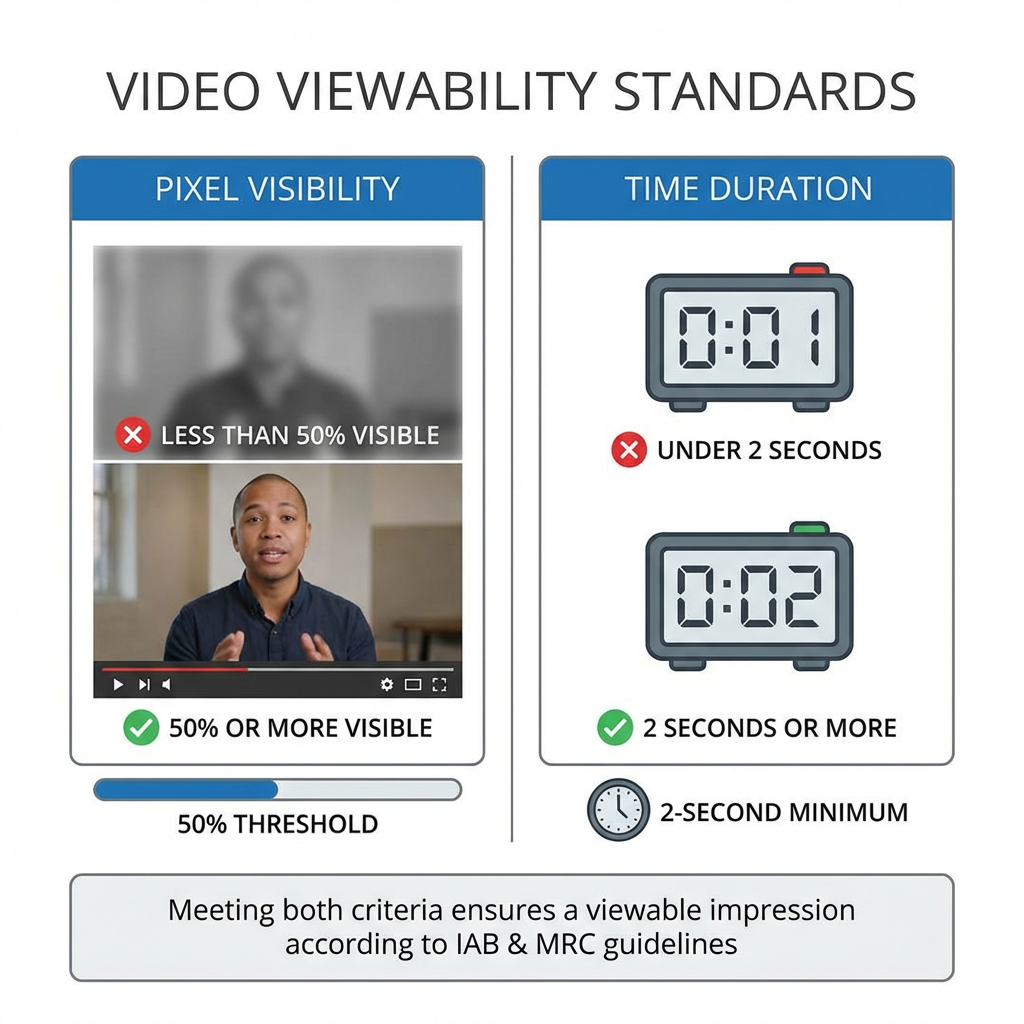
For publishers and ad ops professionals, understanding video viewability is essential for maximizing revenue, maintaining advertiser relationships, and optimizing inventory performance. Unlike display ads, which require only one second of visibility, video ads have a higher threshold due to their dynamic nature and higher value proposition.
Industry Standards for Video Viewability
MRC and IAB Guidelines
The Media Rating Council established the foundational standards for video viewability measurement:
- 50% pixel visibility: At least half of the video player must be visible in the browser viewport
- 2-second duration: The visibility threshold must be maintained for a minimum of two consecutive seconds
- Continuous measurement: Viewability must be tracked throughout the ad's lifecycle
- Focus requirements: The browser tab must be in focus for the duration to count
GroupM Viewability Standards
Many major advertisers follow GroupM's enhanced standards, which are more stringent:
- 100% pixel visibility: The entire video player must be visible
- 50% completion rate: At least half of the video content should play through
- Audible playback: Sound must be enabled or available
Premium Video Standards
For premium video inventory, additional criteria often apply:
- Player size minimums (typically 400x300 pixels or larger)
- Placement restrictions (above-the-fold preferred)
- Content quality requirements
- Brand safety compliance
Technical Measurement Methods
JavaScript-Based Tracking
Most viewability measurement relies on JavaScript APIs that monitor:
- Intersection Observer API: Modern browsers provide native intersection detection
- Geometric calculations: Legacy methods using getBoundingClientRect()
- Scroll event monitoring: Tracking viewport changes in real-time
- Focus detection: Using Page Visibility API to detect tab switching
// Example viewability detection
const observer = new IntersectionObserver((entries) => {
  entries.forEach(entry => {
    if (entry.intersectionRatio >= 0.5) {
      startViewabilityTimer();
    } else {
      stopViewabilityTimer();
    }
  });
}, { threshold: 0.5 });

observer.observe(videoElement);
Third-Party Verification
Independent measurement providers offer:
- Moat (Oracle): Comprehensive viewability analytics
- Integral Ad Science (IAS): Real-time measurement and optimization
- DoubleVerify: Brand safety and viewability combined
- HUMAN (formerly White Ops): Fraud detection with viewability
Server-Side Measurement
Emerging approaches include:
- Server-side ad insertion (SSAI) tracking
- Connected TV viewability measurement
- Cross-device viewability tracking
- First-party data integration
Video Ad Formats and Viewability
Pre-Roll Advertisements
Pre-roll ads typically achieve the highest viewability rates because:
- Users intentionally initiated video playback
- Content is above-the-fold by default
- Immediate visibility upon page load
- Higher user engagement and intent
Typical pre-roll viewability rates range from 70-85% across desktop and mobile platforms.
Mid-Roll and Post-Roll
Mid-roll placements can achieve excellent viewability when:
- Users are engaged with primary content
- Video player remains in viewport
- Ad frequency is optimized to prevent abandonment
Outstream and Native Video
Outstream video formats present unique challenges:
- Scroll-triggered playback: Ads start playing when entering viewport
- Auto-pause functionality: Playback stops when leaving viewport
- Sticky player behavior: Following users as they scroll
- Expandable formats: Growing from banner to video player
Factors Affecting Video Viewability
Technical Factors
Page Load Speed: Slow-loading pages negatively impact viewability as users may scroll past ad placements before content renders.
Player Size and Placement: Larger players positioned above-the-fold achieve significantly higher viewability rates. Publishers using solutions like Veedmo often see improved viewability through optimized player positioning and responsive design.
Mobile Optimization: Mobile-first design ensures proper scaling and visibility across device types.
Ad Format Selection: Choosing appropriate formats for each placement maximizes viewability potential.
User Behavior Patterns
Scroll Velocity: Fast scrolling reduces viewability opportunities, especially for outstream formats.
Device Usage: Desktop users typically achieve higher viewability rates due to larger screen real estate.
Content Engagement: Users engaged with surrounding content are more likely to view video ads completely.
Time of Day: Viewability rates often peak during prime engagement hours (typically 7-10 PM).
Inventory Quality Factors
Bot Traffic: Non-human traffic artificially inflates impressions while reducing viewability rates.
Placement Quality: Premium placements within editorial content outperform remnant inventory.
Content Relevance: Contextually relevant ads achieve better viewability and completion rates.
Programmatic Viewability Optimization
Bid Strategy Adjustments
Publishers can optimize programmatic performance through:
- Viewability prediction models: Using historical data to predict placement performance
- Real-time optimization: Adjusting bids based on viewability likelihood
- Deal ID prioritization: Creating premium packages for high-viewability inventory
- Supply path optimization: Reducing intermediaries to improve transparency
Header Bidding Considerations
Header bidding implementations should account for:
- Timeout settings that don't compromise viewability measurement
- Demand partner requirements for viewability thresholds
- Real-time reporting capabilities
- Integration with viewability measurement vendors
Prebid Integration
Prebid.js offers viewability-focused features:
- Viewability analytics adapters
- Conditional bid adjustments based on viewability predictions
- Integration with major verification vendors
- Custom viewability threshold configuration
Connected TV and FAST Platforms
CTV Viewability Measurement
Connected TV presents unique measurement challenges:
- Full-screen viewing: 100% viewability by default
- Completion rate focus: Emphasis shifts to ad completion metrics
- Cross-device tracking: Measuring viewability across multiple screens
- SSAI integration: Server-side measurement requirements
FAST Platform Considerations
Free Ad-Supported Television platforms optimize viewability through:
- Strategic ad pod placement
- Viewer retention analysis
- Content recommendation algorithms
- Dynamic ad insertion based on engagement
Measurement Challenges and Solutions
Cross-Domain Limitations
Iframe-based ad serving creates measurement blind spots:
- SafeFrame integration: Enabling limited viewability detection
- PostMessage communication: Coordinating between frames
- Friendly iframe implementation: Removing cross-domain restrictions
- Server-side tracking: Supplementing client-side measurement
Mobile App Measurement
In-app video advertising requires specialized approaches:
- Mobile measurement partner (MMP) integration
- App-ads.txt compliance
- OMSDK (Open Measurement SDK) implementation
- Privacy-compliant tracking methods
Privacy Regulation Impact
GDPR, CCPA, and other privacy laws affect viewability measurement:
- Consent management platform integration
- First-party data utilization
- Cookieless measurement techniques
- Privacy-compliant user identification
Optimization Strategies for Publishers
Layout and Design Optimization
Above-the-Fold Placement: Position video players in immediately visible areas to maximize initial viewability.
Responsive Design: Ensure video players scale appropriately across all device types and screen orientations.
Lazy Loading Implementation: Load video content as users approach ad placements to reduce page weight while maintaining viewability.
Sticky Player Features: Implement picture-in-picture or sticky player functionality to maintain viewability as users scroll.
Technical Implementation
VAST Tag Optimization: Ensure VAST tags include viewability tracking pixels and comply with industry standards.
Player Configuration: Configure video players with optimal autoplay settings, muting preferences, and viewability-friendly defaults.
Ad Serving Optimization: Minimize ad serving latency to reduce the risk of users scrolling past placements before ads load.
Inventory Management
Quality Score Development: Create internal quality scores based on historical viewability performance.
Placement Testing: Continuously A/B test ad placements to identify optimal positioning.
Demand Partner Evaluation: Regularly assess demand partners based on viewability requirements and performance.
Reporting and Analytics
Key Performance Indicators
Essential viewability metrics include:
- Viewability Rate: Percentage of measured impressions meeting viewability thresholds
- Measurability Rate: Percentage of impressions successfully measured for viewability
- Time in View: Average duration ads remain viewable
- Completion Rate: Percentage of viewable impressions playing to completion
Reporting Integration
Integrate viewability data with:
- Google Ad Manager reporting
- Demand-side platform analytics
- First-party analytics platforms
- Business intelligence dashboards
Performance Analysis
Regular analysis should focus on:
- Trending viewability rates over time
- Device and browser performance variations
- Placement and format effectiveness
- Correlation between viewability and revenue
Future of Video Viewability
Emerging Technologies
Attention Measurement: Moving beyond viewability to measure actual user attention and engagement.
AI-Powered Optimization: Machine learning algorithms predicting and optimizing viewability in real-time.
Blockchain Verification: Immutable viewability measurement records for increased transparency.
5G Impact: Faster loading times and improved video quality affecting viewability standards.
Industry Evolution
Trends shaping the future include:
- Standardization across measurement vendors
- Integration with broader attention metrics
- Privacy-first measurement approaches
- Cross-platform measurement harmonization
Video viewability remains a cornerstone of digital advertising success. Publishers who master viewability measurement, optimization, and reporting will build stronger advertiser relationships, command premium rates, and achieve sustainable revenue growth. As the industry evolves toward attention-based metrics and privacy-compliant measurement, maintaining excellence in viewability fundamentals becomes increasingly valuable for long-term success.
Frequently asked questions
What is the difference between viewable and measurable video impressions?
A measurable impression is one where viewability can be technically determined, while a viewable impression is one that meets the MRC standards (50% pixels visible for 2+ seconds). Not all impressions are measurable due to technical limitations like cross-domain restrictions.
How does video viewability measurement work in mobile apps?
Mobile app viewability uses the Open Measurement SDK (OMSDK) which provides standardized measurement across different ad serving platforms. It tracks when video players are visible within the app interface and meets the same 50%/2-second standard as web-based video.
Why do video ads require 2 seconds of visibility while display ads only need 1 second?
Video ads require 2 seconds because they need time for the creative to load, begin playing, and register with the viewer. The longer threshold accounts for the dynamic nature of video content and ensures meaningful exposure opportunity.
Can viewability be measured for server-side ad insertion (SSAI)?
Yes, but it requires different approaches. SSAI viewability often relies on video player events, heartbeat signals, and server-side tracking rather than traditional JavaScript-based measurement methods used for client-side ad insertion.
What viewability rate should publishers aim for?
Industry benchmarks suggest aiming for 70%+ viewability rates, though this varies by format and placement. Pre-roll typically achieves 70-85%, while outstream formats may see 50-70%. Premium inventory should target 80%+ viewability rates.